Best Savings Account in India in 2026: How to Choose the Right Bank Account
Choosing the right savings account is an important part of managing your money. A savings account is not only a place to keep your money safe—it can also provide convenient digital banking, ATM access, UPI payments, interest on balances, bill payments and other banking services.
However, the best savings account in India in 2026 is not necessarily the account offering the highest interest rate. A better choice depends on your balance, spending habits, minimum balance requirements, banking needs, transaction requirements and the fees charged by the bank.
For example, some customers may prefer a large established bank with a wide branch and ATM network, while others may prefer a digital-first account with convenient online onboarding and low maintenance requirements.
In this guide, we explain how to compare savings accounts in India in 2026 and what you should check before opening one.
Important: Savings account interest rates, minimum balance requirements, fees, eligibility criteria and features can change. Always verify the latest details on the bank’s official website before opening an account.
What Is a Savings Account?
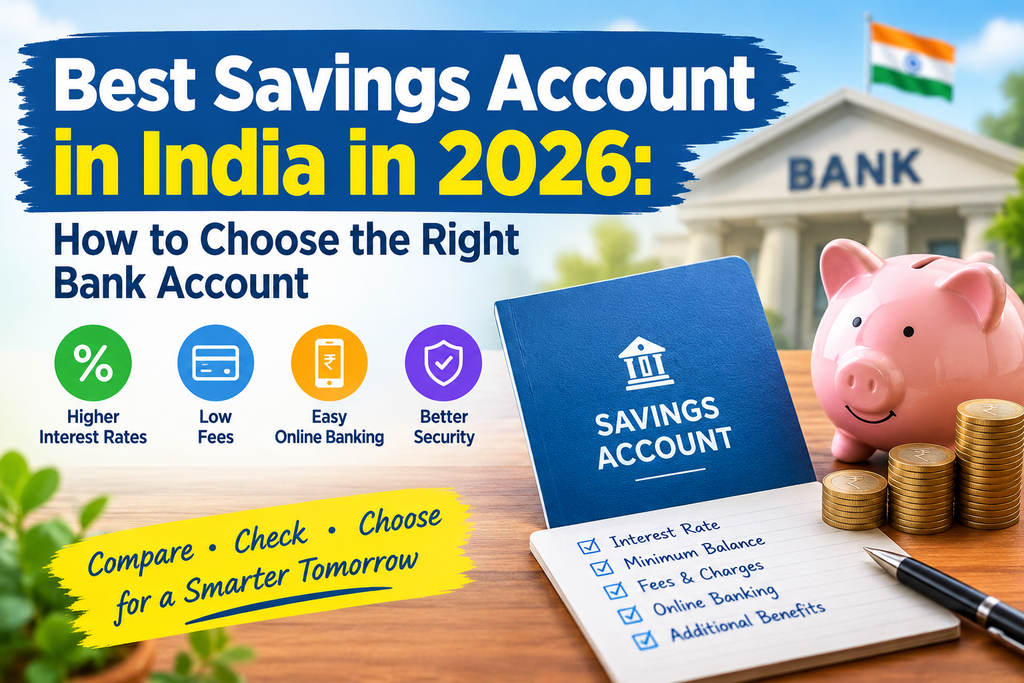
A savings account is a bank account designed primarily for keeping money safely while earning interest on the eligible balance.
It can be used for everyday financial activities such as:
- Receiving salary or income
- Making UPI payments
- Receiving money through bank transfers
- Paying utility bills
- Using a debit card
- Withdrawing cash
- Setting up automatic payments
- Saving money for short-term goals
- Accessing internet and mobile banking
Most people use a savings account as their primary banking account because it combines saving and everyday transactions.
What Makes a Savings Account Good in 2026?
Before choosing an account, don’t focus on just one feature.
A good savings account should offer a combination of:
- Competitive interest rate
- Reasonable minimum balance requirements
- Low or transparent charges
- Reliable mobile banking
- Internet banking
- Convenient ATM access
- UPI support
- Easy fund transfers
- Strong security features
- Good customer support
- Useful debit card benefits
- Suitable account-opening requirements
The importance of each feature depends on your personal requirements.
Key Factors to Compare Before Opening a Savings Account
1. Savings Account Interest Rate
The interest rate determines how much interest you can earn on your eligible savings balance.
However, a higher advertised rate does not automatically mean the account is better.
Check:
- The interest rate applicable to your balance
- Whether different balance slabs have different rates
- How interest is calculated
- How frequently interest is credited
- Whether special conditions apply
For example, SBI currently displays a 2.50% savings deposit rate on its personal banking website, while HDFC Bank has published a 2.50% savings rate for the balances covered by its notice. Rates can change, so readers should verify the current rate directly with the bank.
2. Minimum Balance Requirement
Some savings accounts require customers to maintain a specified balance.
If you fail to maintain the required balance, charges may apply depending on the account’s terms.
Before opening an account, check:
- Monthly average balance requirement
- Average quarterly balance, if applicable
- Penalty or non-maintenance charges
- Whether the account is zero-balance
- Whether different rules apply to different account types
If you generally keep a low balance, a zero-balance or low-maintenance account may be more convenient.
3. Account Opening Charges
Check whether the bank charges anything for:
- Opening the account
- Debit card issuance
- Debit card annual maintenance
- Cheque book
- SMS alerts
- Cash transactions
- ATM transactions
- Additional services
A savings account with a higher interest rate may not be economical if it comes with charges that you frequently incur.
4. Digital Banking
Digital banking is now one of the most important features of a savings account.
A good mobile banking experience should make it easy to:
- Check your balance
- Transfer money
- Pay bills
- Manage UPI
- Download statements
- Block or manage cards
- Update certain account settings
- Receive transaction alerts
Before opening an account, check whether the bank’s mobile app and internet banking services meet your needs.
5. UPI and Online Payments
For everyday users, UPI support is essential.
Your bank account should work smoothly with the UPI ecosystem and provide reliable transaction notifications.
If you use UPI frequently, also pay attention to:
- Transaction limits
- UPI security features
- Transaction alerts
- Failed transaction handling
- Customer support
6. ATM and Branch Network
A digital-first account can be convenient, but physical banking may still be important.
Consider the bank’s:
- ATM availability
- Branch availability
- Cash deposit facilities
- Branch accessibility in your city
- Customer service channels
If you frequently deal with cash, a strong branch and ATM network can be more valuable than a slightly higher interest rate.
7. Debit Card Features
Most savings accounts provide a debit card, but features and charges can vary.
Check:
- Card issuance fee
- Annual maintenance fee
- ATM withdrawal limits
- Domestic ATM usage
- International usage
- Online transaction support
- Contactless payments
- Replacement charges
Choose the card according to your actual spending requirements rather than selecting an account only because it provides premium card benefits.
Best Savings Account for Different Types of Users
There is no single savings account that is best for everyone.
Best for Everyday Banking
If you receive income, make UPI payments and pay bills regularly, look for:
- Low maintenance requirements
- Reliable mobile banking
- UPI support
- Good ATM access
- Low transaction charges
Best for Students
Students generally benefit from accounts with:
- Low or zero minimum balance
- Easy digital account opening
- Low charges
- UPI and mobile banking
- Affordable debit card options
Always check age and eligibility requirements because student account rules vary by bank.
Best for Salaried Professionals
A salaried customer may prioritize:
- Salary account benefits
- Digital banking
- Credit card relationships
- Personal loan eligibility
- Investment services
- Wide ATM and branch access
Salary account benefits can vary between employers, banks and account programs.
Best for Senior Citizens
Senior citizens may place more importance on:
- Branch accessibility
- Customer support
- Easy banking procedures
- ATM availability
- Convenient nominee facilities
- Additional services offered by the bank
They should also compare senior-citizen-specific deposit products separately from ordinary savings accounts.
Best for Digital Banking Users
If you rarely visit a branch, focus on:
- Mobile app quality
- Online account opening
- UPI functionality
- Digital customer support
- Instant transaction notifications
- Online service requests
Savings Account vs Fixed Deposit
A savings account and fixed deposit serve different purposes.
A savings account is generally more suitable for money that you may need for regular spending or emergencies.
A fixed deposit can be more suitable for money that you don’t need immediately and want to keep for a defined period.
Savings Account
- Easy access to money
- Suitable for everyday transactions
- Generally lower interest than many term deposits
- Useful for emergency funds and short-term needs
Fixed Deposit
- Money is deposited for a selected tenure
- Interest rate is generally fixed for the chosen deposit
- Premature withdrawal rules may apply
- Suitable for money that can remain invested for a defined period
You should compare current rates and terms before deciding.
Savings Account vs Current Account
A savings account is generally designed for individuals and everyday saving and banking needs.
A current account is generally designed for businesses and customers who require frequent transactions.
If you are an individual managing your personal finances, a savings account will usually be the more relevant choice.
Business owners should evaluate current accounts separately based on transaction volumes, cash handling and business banking requirements.
Is a Zero-Balance Savings Account Better?
A zero-balance account can be useful for people who don’t want to maintain a specific minimum balance.
However, don’t assume that zero balance means zero charges.
Check the complete fee schedule for:
- Debit card charges
- ATM transactions
- Cash transactions
- Cheque-related services
- SMS alerts
- Other banking services
Always compare the complete account structure.
How to Choose the Right Savings Account
You can use this simple process:
Step 1: Decide Your Purpose
Ask yourself why you need the account.
Is it for:
- Salary?
- Everyday spending?
- Emergency savings?
- Online payments?
- Student expenses?
- Business-related personal banking?
- Saving for a short-term goal?
Step 2: Compare the Minimum Balance
Check whether you can comfortably maintain the required balance.
Step 3: Compare Charges
Look at the complete schedule of charges rather than focusing only on the interest rate.
Step 4: Check Digital Banking
Review mobile banking, UPI and internet banking features.
Step 5: Check ATM and Branch Availability
Make sure the bank is convenient for your location and banking habits.
Step 6: Verify the Latest Terms
Banking products can change.
Before applying, check the official bank website for the latest:
- Interest rates
- Fees
- Eligibility
- Minimum balance
- Account features
- Debit card charges
- Terms and conditions
How Much Money Should You Keep in a Savings Account?
There is no universal amount that every person should keep in a savings account.
A practical approach is to divide your money according to your goals.
You may keep enough money in your savings account for:
- Regular monthly expenses
- Upcoming bills
- Emergency needs
- Short-term financial goals
Money that you don’t need immediately can be considered separately for appropriate savings or investment products based on your financial goals and risk tolerance.
Avoid keeping all of your long-term wealth in a regular savings account simply because it is easy to access.
Is It Safe to Keep Money in a Bank?
Banks in India operate under a regulated banking system.
Eligible deposits are covered by deposit insurance subject to the applicable rules and limits. The current DICGC insurance limit is generally ₹5 lakh per depositor per bank, including principal and interest, subject to the applicable rules.
If you keep significant amounts in bank deposits, understand how deposit insurance works and how deposits across different branches/accounts are treated under the applicable rules.
Common Mistakes to Avoid
Choosing Only on the Basis of Interest Rate
Interest is important, but it should not be the only factor.
Ignoring Bank Charges
Small charges can add up over time.
Not Checking Minimum Balance Rules
Understand the balance requirement before opening the account.
Ignoring Digital Banking Quality
A poor mobile banking experience can become frustrating if you make frequent online transactions.
Keeping Too Much Money Idle
A savings account is useful for liquidity, but long-term financial goals may require different financial products.
Not Reading the Schedule of Charges
Always check the latest official fee schedule before opening an account.
Frequently Asked Questions
Which is the best savings account in India in 2026?
There is no single best savings account for everyone. The right account depends on your balance, minimum-balance preference, banking needs, interest rate, charges, digital services and branch/ATM requirements.
Which bank has the highest savings account interest rate?
Savings interest rates can vary by bank and account type and may change over time. Compare the latest rates directly on official bank websites before making a decision.
Is a zero-balance savings account good?
It can be useful if you don’t want a minimum balance requirement. However, you should still check debit card, ATM and other applicable charges.
How much money should I keep in my savings account?
Keep enough for regular expenses, upcoming payments and short-term or emergency needs. The appropriate amount depends on your personal financial situation.
Is a savings account better than an FD?
They serve different purposes. A savings account provides liquidity for everyday needs, while an FD may be more appropriate for money that can remain deposited for a fixed period.
Can I have multiple savings accounts?
Yes, people can have multiple bank accounts, subject to the banks’ account-opening rules and applicable regulations. Multiple accounts can be useful for separating different financial goals, but maintaining too many accounts can also create unnecessary fees and management work.
Final Thoughts
The best savings account in India in 2026 is the one that fits your actual banking needs—not necessarily the one with the highest advertised interest rate.
Before opening an account, compare the interest rate, minimum balance, fees, ATM access, digital banking, UPI facilities, debit card charges and customer service.
If you are comparing several banks, make a simple checklist and evaluate each account using the same criteria. Most importantly, verify the latest information directly from the bank before applying because rates, charges, eligibility requirements and features can change.
MoneySaving.info Tip: Don’t choose a bank account only because of one attractive feature. Look at the complete cost, convenience and usefulness of the account for your everyday financial needs.
Important Disclaimer
This article is for general educational and informational purposes only and does not constitute financial, investment, banking or legal advice. Interest rates, fees, eligibility criteria, account features and banking policies can change at any time. Always verify the latest information, terms and conditions directly with the relevant bank or official authority before opening an account or making a financial decision.
MoneySaving.info does not guarantee the accuracy, completeness or continued availability of third-party banking products or rates mentioned in this article.
Flipkart Axis Bank Credit Card in 2026: Cashback, Benefits, Fees, Eligibility and Review