How to Create a Monthly Budget in India in 2026: A Step-by-Step Guide
How to Create a Monthly Budget in India in 2026: A Step-by-Step Guide
Managing money effectively is not just about earning more. It is also about knowing where your money goes, controlling unnecessary expenses, and making sure you have enough for savings and future financial goals. A monthly budget can help you do all three.
For many Indian households, monthly expenses include rent, groceries, electricity bills, transport, school fees, loan EMIs, insurance premiums, and family responsibilities. When these expenses are not planned properly, even a regular salary can disappear before the end of the month.
The good news is that you do not need a high income, complicated spreadsheets, or expensive budgeting applications to manage your money. A simple monthly budget can help you organise your finances, prepare for unexpected expenses, and make better financial decisions.
In this guide, you will learn how to create a monthly budget in India in 2026, calculate your spending limits, manage expenses on a low salary, save money consistently, and build a practical budget that works for your lifestyle.
What Is a Monthly Budget?
A monthly budget is a plan that shows how much money you expect to receive, how much you plan to spend, and how much you want to save during a month.
It gives every rupee a purpose and helps you compare your planned spending with your actual expenses.
For example, suppose your monthly take-home salary is ₹30,000. You may allocate money for housing, food, transport, bills, debt repayments, savings, and personal spending.
Instead of spending first and saving whatever remains, a budget helps you plan your priorities before the month begins.
A monthly budget can help you:
- Understand your spending habits.
- Avoid unnecessary purchases.
- Pay bills and EMIs on time.
- Build an emergency fund.
- Save for planned expenses.
- Reduce dependence on credit cards and loans.
- Work towards financial goals with greater confidence.
According to the Reserve Bank of India’s financial education materials, budgeting involves planning income and expenses so that people can manage their money and prepare for future needs. You can read the RBI’s Financial Awareness Messages booklet for further financial education.
Step 1: Calculate Your Monthly Take-Home Income
The first step in creating a budget is understanding how much money you actually have available.
If you are salaried, start with the amount credited to your bank account after deductions. Do not automatically use your gross salary or total cost to company as your budget income.
For example, if your annual salary package is ₹5,00,000 but your monthly take-home salary is ₹32,000, use ₹32,000 as your starting point for monthly planning.
Include other reliable income sources when appropriate, such as:
- Freelance earnings.
- Business income available for personal use.
- Rental income received.
- Regular pension payments.
- Other predictable income.
If you receive bonuses, incentives, or irregular freelance payments, avoid relying on the highest possible amount. Use a conservative estimate based on your actual income history.
For example, if your monthly freelance income changes between ₹10,000 and ₹25,000, create your essential budget around a realistic lower-income estimate. You can allocate additional income towards savings, debt repayment, or other goals when it arrives.
Budgeting tip: Build your monthly spending plan around money you can reasonably expect to receive, not money you hope to earn.
Step 2: Track Your Expenses for at Least One Month
Many people underestimate their spending because small purchases are easy to forget.
A ₹100 snack, ₹150 delivery fee, or ₹250 online purchase may not seem significant individually. However, repeated purchases can add up over a month.
Before deciding where to cut expenses, understand where your money currently goes.
Review your bank statements, UPI transaction history, debit card payments, cash withdrawals, and bills.
Record expenses such as:
- Rent and household costs.
- Groceries and food.
- Electricity, water, gas, and mobile bills.
- Transport and fuel.
- School or college expenses.
- Medical expenses and insurance.
- Loan and credit card payments.
- Subscriptions and entertainment.
- Shopping and personal purchases.
- Gifts, family support, and occasional expenses.
Cash spending deserves special attention because it may not appear in your digital transaction history. Keep receipts or maintain a simple daily spending note.
You can track your expenses using a notebook, spreadsheet, or budgeting application. The best method is the one you can maintain consistently.
After a month, add up your expenses and compare the total with your take-home income.
If your spending is higher than your income, you need to adjust the budget. If money remains unspent, decide how much should go towards savings and future goals.
Step 3: Divide Your Expenses Into Categories
Once you understand your spending, divide it into clear categories. This makes it easier to identify priorities and decide where adjustments are possible.
Essential Expenses
These are expenses required for basic living and important financial commitments.
Examples include:
- Rent or essential housing costs.
- Groceries and basic household supplies.
- Electricity, water, and cooking gas.
- Necessary transport.
- School fees and essential education costs.
- Required loan payments.
- Essential healthcare and insurance premiums.
These expenses should be accounted for before allocating money to optional purchases.
Non-Essential Expenses
These expenses may improve your lifestyle but can often be reduced or postponed.
Examples include:
- Frequent restaurant meals.
- Entertainment subscriptions.
- Impulse shopping.
- Expensive upgrades to phones or electronics.
- Non-essential travel.
- Unplanned online purchases.
Non-essential spending is not automatically bad. A realistic budget should leave room for enjoyment when essential needs, debt commitments, and financial priorities are covered.
Savings and Financial Goals
Savings should have a specific purpose rather than being whatever remains at the end of the month.
Possible goals include:
- Building an emergency fund.
- Saving for education.
- Preparing for an annual insurance premium.
- Planning a holiday.
- Making a future home purchase.
- Paying down expensive debt.
- Investing for long-term goals.
Separate short-term savings from long-term investments so that you know which money is available for upcoming expenses.
Step 4: Try the 50/30/20 Budget Rule
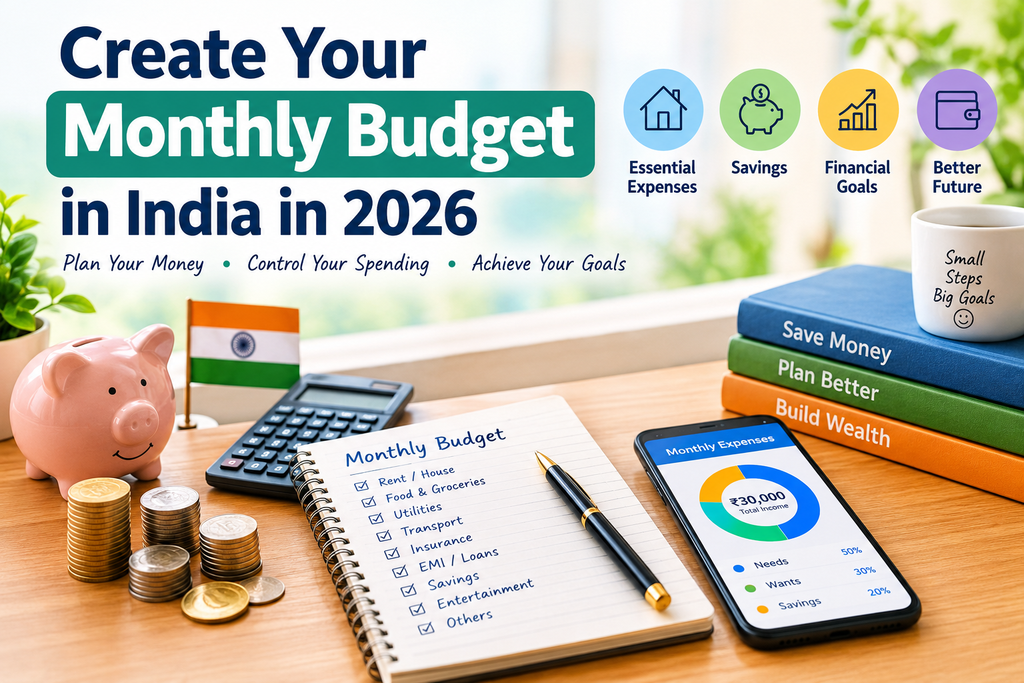
The 50/30/20 rule is a simple budgeting framework that divides take-home income into three broad categories:
- 50% for needs.
- 30% for wants.
- 20% for savings and financial goals.
It is a starting point, not a strict rule. Your actual allocation may need to change depending on your rent, income, city, family size, debts, and other responsibilities.
Example of a ₹30,000 Monthly Budget
| Budget category | Suggested share | Monthly amount |
|---|---|---|
| Essential needs | 50% | ₹15,000 |
| Wants and lifestyle | 30% | ₹9,000 |
| Savings and financial goals | 20% | ₹6,000 |
| Total | 100% | ₹30,000 |
These figures illustrate the framework; they are not recommended limits for every household.
If your rent alone is ₹12,000, allocating only ₹15,000 to all essential expenses may be unrealistic. You may need to reduce discretionary spending and adjust your savings percentage until your income or expenses change.
When the 50/30/20 Rule May Not Work
The framework can be difficult to follow when:
- You earn a low salary.
- You support several family members.
- You live in an expensive city.
- You have substantial loan EMIs.
- You are paying for education or medical treatment.
- Your income changes from month to month.
In these situations, start with essential needs and minimum financial commitments. Then choose a realistic savings amount and adjust optional spending.
Even saving 5% or 10% of your income consistently can be a useful starting point if a 20% contribution is currently unaffordable.
Step 5: Create a Realistic Monthly Budget for Your Salary
A budget should reflect your actual financial situation, not an ideal situation that is impossible to maintain.
Here are three illustrative monthly budgets for different take-home incomes.
Monthly Budget for a ₹15,000 Salary
| Expense category | Monthly amount |
|---|---|
| Housing contribution or rent | ₹4,000 |
| Groceries and food | ₹3,500 |
| Utilities and mobile | ₹1,000 |
| Transport | ₹1,000 |
| Family and personal essentials | ₹2,000 |
| Savings | ₹1,000 |
| Miscellaneous and other needs | ₹2,500 |
| Total | ₹15,000 |
This example assumes relatively modest housing costs. Someone paying higher rent or supporting dependants will need a different allocation.
Monthly Budget for a ₹25,000 Salary
| Expense category | Monthly amount |
|---|---|
| Rent and housing | ₹6,000 |
| Groceries and food | ₹4,500 |
| Utilities and mobile | ₹1,500 |
| Transport | ₹2,000 |
| Insurance and healthcare | ₹1,000 |
| Debt payments, if applicable | ₹2,000 |
| Savings | ₹3,000 |
| Personal and miscellaneous expenses | ₹5,000 |
| Total | ₹25,000 |
This is an illustrative allocation. The debt payment, insurance, and savings amounts should be adjusted to reflect your actual commitments.
Monthly Budget for a ₹40,000 Salary
| Expense category | Monthly amount |
|---|---|
| Rent and housing | ₹10,000 |
| Groceries and household needs | ₹5,000 |
| Utilities and mobile | ₹2,000 |
| Transport | ₹3,000 |
| Insurance and healthcare | ₹2,000 |
| Debt payments, if applicable | ₹3,000 |
| Savings and investments | ₹8,000 |
| Personal and miscellaneous expenses | ₹7,000 |
| Total | ₹40,000 |
These examples show how a budget can be organised at different income levels. They are not estimates of what every Indian household should spend.
If your necessary expenses exceed these allocations, adjust the numbers rather than neglecting essential needs or missing required loan payments.
Step 6: Pay Yourself First
One common budgeting mistake is waiting until the end of the month to save money.
By that time, many people have already spent more than expected.
A more consistent approach is to set aside a realistic savings amount soon after receiving your salary.
For example, if you earn ₹25,000 and decide to save ₹1,500 each month, schedule a transfer shortly after your salary arrives, provided your account has enough money to cover essential payments.
You can divide the contribution between different goals, such as:
- Emergency savings.
- Annual bills.
- Planned purchases.
- Long-term investments, if appropriate.
Start with an amount you can maintain. If ₹1,500 leaves you unable to pay essential bills, reduce it and revise your budget.
The aim is to make saving a regular financial habit without creating new debt or missed payments.
Step 7: Build an Emergency Fund Within Your Budget
An emergency fund can help you handle unexpected expenses without immediately relying on a credit card or personal loan.
Examples include an urgent medical bill, necessary vehicle repairs, a temporary income interruption, or an essential home repair.
Start by calculating your monthly essential expenses and setting an initial savings target.
For example, if your essential monthly expenses are ₹18,000, an initial one-month reserve would be ₹18,000. You could then gradually work towards three to six months of essential expenses, depending on your income stability and responsibilities.
If you cannot save a large amount immediately, begin with a smaller target.
Consider keeping emergency money in an accessible savings account or another suitable low-risk option after reviewing its terms. The priority is access and suitability, not chasing the highest return.
For more details, read our related guide: How to Build an Emergency Fund in 2026: A Complete Guide to Saving for Unexpected Expenses.
Step 8: Manage Loan EMIs and Credit Card Payments
Debt payments can consume a substantial part of monthly income, so they should be included in your budget from the beginning.
List every loan and credit card balance, including:
- Outstanding balance.
- Interest rate.
- Required monthly payment.
- Payment due date.
- Any applicable fees or charges.
Pay the required minimums and instalments on time. If you have high-interest debt, consider directing additional money towards repayment after accounting for essential expenses and an appropriate initial cash buffer.
Credit card balances deserve particular attention. Paying only the minimum amount can leave a balance that continues to attract interest under the card’s terms.
Avoid treating your credit limit as extra income. A credit card can help with payment convenience, but spending on it still creates an obligation.
If your required debt payments leave little room for essentials, review your expenses and consider contacting your lender through official channels to understand available options before missing payments.
Step 9: Reduce Unnecessary Expenses Without Sacrificing Essentials
A successful budget does not require cutting every enjoyable activity. It requires identifying spending that provides little value compared with its cost.
Here are practical ways to reduce unnecessary expenses.
Plan Groceries Before Shopping
Prepare a weekly meal plan and shopping list. Check what you already have at home before purchasing additional items.
Compare prices and quantities where useful, but do not buy perishable products in bulk if they are likely to go to waste.
Review Subscriptions
Check streaming services, memberships, software subscriptions, and other recurring payments.
Cancel services you rarely use and review renewal dates to avoid unexpected charges.
Reduce Unplanned Online Shopping
Add non-essential items to a wishlist instead of purchasing them immediately.
Waiting a day or two can help you decide whether the purchase is genuinely useful.
Compare Transport Costs
Where practical, compare public transport, shared travel, and other suitable options with the cost of frequent individual rides.
Choose the option that balances cost, safety, time, and convenience.
Review Utility Usage
Switch off unused appliances, avoid unnecessary electricity consumption, and review mobile or internet plans to ensure you are not paying for services you do not need.
Small savings may appear modest, but repeated savings can free up money for more important goals.
Step 10: Plan for Expenses That Do Not Occur Every Month
Some expenses occur only once or a few times a year. If you ignore them, they can disrupt your monthly budget when they arrive.
Examples include:
- Annual insurance premiums.
- School admission and education expenses.
- Vehicle maintenance.
- Festival spending.
- Medical check-ups.
- Property-related expenses.
- Annual subscriptions.
- Planned travel and family events.
Instead of treating these expenses as unexpected, estimate their annual cost and save a portion each month.
For example, if you expect an annual insurance premium of ₹12,000, setting aside ₹1,000 per month can help you prepare for the payment.
This approach turns irregular but predictable expenses into planned budget items.
Keep these savings separate from your emergency fund because annual bills are expected expenses rather than genuine emergencies.
Step 11: Use a Simple Monthly Budget Tracker
You do not need expensive software to manage your budget. A notebook or spreadsheet can be enough.
Use a simple table with four columns:
| Category | Planned amount | Actual spending | Difference |
|---|---|---|---|
| Groceries | ₹4,000 | ₹4,300 | -₹300 |
| Transport | ₹2,000 | ₹1,800 | +₹200 |
| Utilities | ₹1,500 | ₹1,450 | +₹50 |
| Entertainment | ₹1,000 | ₹1,300 | -₹300 |
| Savings | ₹2,000 | ₹2,000 | ₹0 |
In this example, negative differences mean spending exceeded the plan, while positive differences mean spending was below the plan.
The figures are illustrative.
At the end of each week, update your actual spending. At the end of the month, compare the results with your plan and identify categories that need adjustment.
Do not treat a budget overrun as a failure. Use it as information to make next month’s budget more realistic.
Step 12: Adjust Your Budget for Irregular Income
Freelancers, self-employed people, commission-based workers, and small business owners may not receive the same amount every month.
A fixed budget based on an unusually good month can lead to financial stress when income falls.
A practical approach is to:
- Review your income over several recent months.
- Estimate a conservative amount for essential spending.
- Prioritise housing, food, utilities, healthcare, and required debt payments.
- Build a reserve during stronger earning months.
- Delay optional spending when income is lower.
- Keep personal expenses separate from business expenses.
If your earnings are seasonal, plan ahead for months when income is usually lower.
For example, a freelancer who earns ₹35,000 in a strong month and ₹18,000 in a slow month should avoid committing to fixed discretionary spending that depends on earning ₹35,000 every month.
A reserve accumulated during stronger months can help manage fluctuations.
Step 13: Set Clear Financial Goals
A budget becomes more useful when you know what you want your money to achieve.
Instead of setting a vague goal such as “save more money,” define the amount, purpose, and timeline.
Examples include:
- Save ₹12,000 over the next 12 months for an annual expense.
- Build an initial emergency fund of ₹10,000.
- Save ₹30,000 over 10 months for a planned purchase.
- Repay a specific high-interest debt by a realistic target date.
For a goal of ₹30,000 over 10 months, you would need to save ₹3,000 per month, assuming no interest and no withdrawals.
If that amount is too high for your current budget, extend the timeline or choose a smaller target.
The Securities and Exchange Board of India’s investor education website explains how financial goals can be made specific, measurable, achievable, realistic, and time-bound.
Read its guide to financial goals and budgeting for additional guidance.
Step 14: Review Your Budget Every Month
Your budget should change when your circumstances change.
At the end of each month, ask yourself:
- Did I spend more than I planned?
- Which expenses were higher than expected?
- Did I save the amount I intended to save?
- Were there any expenses I forgot to include?
- Can I reduce a recurring expense?
- Do I need to change a financial goal?
- Has my income or family situation changed?
If you receive a salary increase, consider directing part of the additional income towards savings or debt repayment instead of automatically increasing every lifestyle expense.
If your expenses rise, adjust your allocations and prioritise the most important needs.
A budget is a working financial plan, not a set of rules that can never change.
Common Monthly Budgeting Mistakes to Avoid
1. Creating an Unrealistic Budget
Setting food, housing, or transport limits that are too low can make a budget impossible to maintain.
Start with actual spending and reduce expenses gradually where reasonable.
2. Forgetting Small Purchases
Frequent small purchases can add up. Record them alongside larger expenses.
3. Ignoring Annual Bills
Plan for predictable annual costs by saving towards them each month.
4. Saving Only What Remains
Decide on a realistic savings amount before discretionary spending begins.
5. Using Credit Cards to Cover a Budget Shortfall
Borrowing to fund regular living expenses can make financial problems worse if the balance attracts high interest.
Review your budget and seek appropriate assistance if essential expenses regularly exceed income.
6. Comparing Your Budget With Someone Else’s
Housing, family responsibilities, income, location, and health needs differ. Build a budget around your own circumstances rather than copying another person’s spending limits.
7. Giving Up After One Bad Month
Unexpected expenses can affect even a well-prepared budget. Review what happened and revise the plan rather than abandoning budgeting altogether.
A Practical 30-Day Plan to Start Budgeting
You can begin managing your money with a simple plan over the next month.
Week 1: Understand your finances
- Calculate your monthly take-home income.
- Review bank statements and UPI transactions.
- List essential and non-essential expenses.
- Identify outstanding debts and payment dates.
Week 2: Build your budget
- Choose your spending categories.
- Set realistic limits for each category.
- Decide on a manageable savings contribution.
- Include annual bills and irregular expenses.
Week 3: Follow the plan
- Record daily spending.
- Review expenses at the end of the week.
- Adjust categories that are clearly unrealistic.
- Avoid unnecessary borrowing for discretionary purchases.
Week 4: Review your progress
- Compare planned and actual spending.
- Identify your biggest opportunities to save.
- Check whether your savings contribution was affordable.
- Set next month’s targets.
Repeat this process each month. Over time, you should gain a clearer understanding of your spending patterns and the changes that work best for your household.
Frequently Asked Questions
1. How do I create a monthly budget in India?
Calculate your take-home income, record your expenses, divide spending into categories, set realistic limits, allocate money for savings, and review your actual spending at the end of each month.
2. What is the 50/30/20 budget rule?
It is a budgeting framework that allocates 50% of take-home income to needs, 30% to wants, and 20% to savings and financial goals. You can adjust the percentages to suit your circumstances.
3. How can I manage a monthly budget on a ₹15,000 salary?
Prioritise housing, food, utilities, transport, healthcare, and required payments. Start with a manageable savings contribution and reduce discretionary expenses where practical. Your budget should reflect your actual living costs.
4. How much of my salary should I save every month?
The appropriate amount depends on your income, expenses, debts, and goals. Saving 20% is a common guideline, but a smaller contribution may be more realistic initially. Increase it when your financial situation permits.
5. Should I save money or repay debt first?
Continue making required debt payments and consider building a small initial cash reserve. If you have high-interest debt, prioritise repayment while balancing your essential expenses and savings needs.
6. Is a budgeting app necessary?
No. A notebook or spreadsheet can work well. A budgeting application may be helpful if it makes tracking easier, but choose a method you can maintain consistently.
7. How do I control unnecessary spending?
Track your expenses, set category limits, review subscriptions, plan purchases, and distinguish essential needs from optional wants. Focus on changes that are practical and sustainable.
8. How can I budget with an irregular income?
Use a conservative income estimate, prioritise essential costs, save more during stronger earning months, and maintain a reserve for periods when income falls.
9. What should I do if I exceed my budget?
Identify why the overspending occurred, update the relevant category, and adjust next month’s plan. If essential expenses repeatedly exceed income, review your costs and explore realistic ways to improve your cash flow.
10. How often should I review my monthly budget?
Check spending weekly and conduct a more complete review at the end of each month. Revisit your plan whenever your income, expenses, debts, or family responsibilities change significantly.
Final Verdict
Creating a monthly budget in India in 2026 does not require complicated calculations or a high income. It requires a clear understanding of your take-home pay, realistic expense limits, and consistent attention to where your money goes.
Start by tracking your spending and separating essential needs from optional purchases. Set aside a manageable amount for savings, prepare for annual expenses, and include loan payments in your plan.
Review your progress every month and adjust your budget when circumstances change. If you cannot follow the 50/30/20 rule, do not abandon budgeting. Use a plan that reflects your actual income and responsibilities.
The goal of budgeting is not to stop spending money. It is to make sure your money supports your needs, protects your financial stability, and helps you work towards your goals.
Important Disclaimer
This article is intended for general educational and informational purposes only. It does not constitute personalised financial, investment, tax, legal, or credit advice. Every individual’s financial situation is different, and budgeting decisions should reflect actual income, expenses, debt obligations, family responsibilities, and financial goals.
Financial products, interest rates, fees, and applicable rules may change. Verify relevant information with official institutions before making financial decisions. MoneySaving.info does not guarantee any particular savings outcome or financial result.
Official Sources and Further Reading
- Reserve Bank of India — Financial Awareness Messages
- SEBI Investor Education — Financial Goals and Budgeting
- SEBI Investor Education — Management of Income and Expenses
These resources provide additional educational information about budgeting, spending, saving, and financial planning.