
Axis Bank Credit Cards in 2026: Types, Benefits, Fees, Eligibility & How to Choose
Axis Bank Credit Cards in 2026: Types, Benefits, Fees, Eligibility & How to Choose
Axis Bank offers a wide range of credit cards designed for different spending needs. Depending on the card, customers can get benefits related to cashback, shopping, travel, fuel, rewards, dining, airport lounges and premium lifestyle services.
However, the best Axis Bank credit card is not the same for everyone.
A card that provides excellent value to a frequent traveller may not be useful for someone who mainly spends on groceries or online shopping. Similarly, a premium credit card with a high annual fee may not be worthwhile if you do not use its travel and lifestyle benefits regularly.
The smarter approach is to compare a card’s rewards, fees, spending categories, exclusions, redemption options and eligibility requirements with your actual spending habits.
In this guide, we explain the major types of Axis Bank credit cards, how to compare them, what fees and exclusions to check, how eligibility works, and how to use a credit card responsibly in 2026.
What Is an Axis Bank Credit Card?

An Axis Bank credit card allows eligible customers to make purchases using a predefined credit limit provided by the bank.
Instead of immediately paying the merchant from your bank account, the transaction is added to your credit-card account. You then receive a monthly statement showing your transactions and the amount that needs to be paid by the due date.
Depending on the specific card, benefits may include:
- Cashback
- EDGE REWARD Points
- EDGE Miles
- Shopping offers
- Travel benefits
- Dining offers
- Fuel-related benefits
- Airport lounge access
- Partner discounts
- Milestone rewards
- Premium lifestyle benefits
The important point is that not every Axis Bank credit card offers the same benefits.
Fees, reward rates, exclusions, eligibility requirements and redemption options can vary considerably between cards. Axis Bank’s current credit-card MITC also shows significant differences in fees between individual products.
Therefore, you should always evaluate the specific card rather than assuming that all Axis Bank credit cards work in the same way.
Types of Axis Bank Credit Cards
Axis Bank’s credit-card range covers different customer requirements. The right category for you depends largely on where you already spend your money.
Cashback Credit Cards
Cashback credit cards are generally suitable for people who prefer straightforward savings instead of collecting traditional reward points.
Axis Bank’s current Cashback Credit Card has a tiered cashback structure. Under the current terms, eligible online spending receives different cashback rates depending on monthly net spending, with higher rates applying at higher spending levels. The current terms also specify a total accelerated cashback cap of ₹4,000 per statement month.
This is an important example of why you should not judge a card solely by its highest advertised cashback rate.
You should also check:
- Which transactions qualify
- Monthly cashback limits
- Excluded categories
- Whether returned transactions affect cashback
- How EMI conversions are treated
- Any changes to the terms
Axis Bank’s current Cashback Card terms specifically define qualifying online spending and list exclusions that can affect cashback eligibility.
Shopping Credit Cards
Shopping-focused cards can be useful for customers who regularly purchase from particular merchants or online platforms.
These cards may offer accelerated rewards, cashback or special promotional discounts on selected transactions.
Before choosing a shopping card, ask yourself:
- Do I regularly use the partner platform?
- Are the rewards useful for my normal purchases?
- What is the annual fee?
- Is there a spending threshold for fee waiver?
- Are there limits on rewards?
- Which transactions are excluded?
A co-branded card can provide excellent value when you already use its partner regularly. If you rarely use that platform, however, another card may be more suitable.
Travel Credit Cards
Travel-focused credit cards are designed for people who spend regularly on travel.
Depending on the card, benefits may include:
- Travel rewards
- Airline-related benefits
- Hotel benefits
- Airport lounge access
- International spending benefits
- Travel-related offers
- Reward points or miles
However, travel benefits should always be evaluated against the card’s annual fee.
For example, paying a premium annual fee may make sense for a frequent traveller who uses lounge access and travel rewards regularly. It may not make sense for someone who travels only once or twice a year.
Reward Credit Cards
Reward cards allow customers to earn points on eligible spending.
When comparing reward cards, don’t focus only on the number of points you can earn.
You should also understand the value of those points.
Check:
- Points earned per eligible transaction
- Bonus reward categories
- Redemption options
- Point value
- Transfer options, where applicable
- Expiry or forfeiture conditions
- Reward exclusions
- Annual fee
- Milestone benefits
A card offering 10 points may sound better than a card offering 5 points, but the second card could potentially provide greater value if its points are easier or more valuable to redeem.
Fuel Credit Cards
Fuel-focused credit cards can be useful for customers who spend a significant amount on eligible fuel transactions.
Before choosing a fuel card, check the:
- Eligible fuel stations
- Fuel surcharge waiver
- Reward or cashback rate
- Monthly limits
- Minimum transaction requirements
- Excluded transactions
Fuel benefits can vary between cards, so don’t assume that every Axis Bank credit card provides the same fuel-related benefits.
Premium Credit Cards
Premium cards are generally designed for customers looking for enhanced travel, lifestyle and reward benefits.
These cards can provide additional privileges, but they may also have significantly higher fees and stricter eligibility requirements.
The value of a premium card depends on how much you actually use its benefits.
If you rarely travel, rarely use airport lounges and do not use premium lifestyle offers, paying a high annual fee may not be worthwhile.
How to Choose the Right Axis Bank Credit Card
Instead of asking:
“Which Axis Bank credit card is the best?”
ask:
“Which Axis Bank credit card gives me the most value for my existing spending?”
That small change in approach can make your comparison much more useful.
Start With Your Monthly Spending
Look at your expenses from the previous three to six months.
Divide them into categories such as:
- Groceries
- Online shopping
- Dining
- Travel
- Fuel
- Utilities
- Insurance
- Education
- Rent
- Entertainment
- Other purchases
For example:
| Spending Category | Monthly Amount |
|---|---|
| Groceries | ₹8,000 |
| Online Shopping | ₹5,000 |
| Dining | ₹4,000 |
| Travel | ₹3,000 |
| Fuel | ₹3,000 |
| Other Expenses | ₹2,000 |
| Total | ₹25,000 |
Now you have a much clearer picture of where your money actually goes.
If online shopping represents a large part of your spending, compare cashback and shopping cards.
If travel is a major expense, compare travel-oriented cards.
If you spend heavily on fuel, look at cards where fuel benefits are relevant.
The goal is to match the card with your existing behaviour, not to change your lifestyle just to earn rewards.
Compare the Rewards With Your Actual Spending
Suppose a credit card offers attractive rewards on a category where you spend only ₹500 per month.
Meanwhile, another card provides moderate rewards on a category where you spend ₹10,000 every month.
The second card may provide more practical value even though its advertised reward rate looks less impressive.
This is why advertised reward rates should always be considered alongside your actual spending.
Check the Annual Fee
A credit card’s annual fee can significantly affect its overall value.
Before applying, check:
- Joining fee
- Annual or renewal fee
- Fee-waiver conditions
- Add-on card fee
- Cash withdrawal charges
- Foreign transaction charges
- Late-payment charges
- EMI-related charges
- Other applicable fees
Axis Bank’s current MITC demonstrates that credit-card charges can vary significantly from one card to another. Some products have no joining or annual fee, while other cards carry considerably higher charges.
Therefore, never assume that a particular fee applies to every Axis Bank credit card.
Check the Fee-Waiver Requirement
Some cards offer annual-fee waivers when the cardholder reaches a specified level of eligible spending.
This can be useful if you naturally spend enough to qualify.
But you should never spend unnecessarily just to reach a fee-waiver threshold.
For example, if a card requires several lakh rupees of annual spending to waive its renewal fee, the benefit is useful only if that level of spending already fits your normal budget.
A fee waiver should be a result of your normal spending—not a reason to spend more.
Read the Reward Exclusions
This is one of the most important parts of choosing a credit card.
A card may advertise an attractive reward rate, but certain transactions may not qualify.
Axis Bank’s current Cashback Card terms identify several excluded categories, including transportation and tolls, insurance, educational institutions, government institutions, jewellery, precious metals and watches, wallet transactions, rent and fuel.
This means you should never calculate your expected cashback simply by multiplying your total monthly spending by the advertised cashback rate.
Instead, identify which transactions are actually eligible.
Axis Bank Credit Card Fees and Charges
Credit-card costs go beyond the annual fee.
Depending on the specific card, you may encounter charges related to:
| Charge | What to Check |
|---|---|
| Joining Fee | One-time fee when applicable |
| Annual Fee | Renewal fee from the applicable year |
| Fee Waiver | Spending requirement, if available |
| Cash Withdrawal | Cash advance fee and applicable interest |
| Foreign Transactions | Foreign currency/markup charges |
| Late Payment | Applicable late-payment charges |
| EMI | Interest and processing charges |
| Add-on Card | Applicable additional fee |
| Other Charges | Card-specific service charges |
Axis Bank’s current MITC contains a card-wise schedule of charges and makes clear that the applicable fees depend on the individual credit card.
Before applying, always check the latest official fee schedule for the exact card you are considering.
Axis Bank Credit Card Eligibility
Eligibility depends on the individual card and the applicant’s profile.
The bank may consider factors such as:
- Age
- Residential status
- Income
- Employment or business profile
- Credit history
- Existing relationship with the bank
- Internal credit assessment
- Required documentation
Some cards publish indicative eligibility requirements, but meeting the listed requirements does not necessarily guarantee approval.
The bank can assess your application based on its internal policies and credit assessment process.
Therefore, treat published eligibility criteria as basic guidelines rather than a guaranteed approval promise.
Documents You May Need
The exact documentation depends on the card and your personal profile.
Depending on the application, the bank may request:
- PAN or Form 60
- Identity proof
- Address proof
- Income proof
- Salary slips
- Form 16
- Income-tax return
- Bank statements
- Other supporting documents
Make sure the information provided during the application is accurate and matches your supporting documents.
Providing incomplete or incorrect information can delay the application process.
How to Apply for an Axis Bank Credit Card
The application process generally involves a few basic steps.
Compare Available Cards
Start by comparing the cards based on rewards, cashback, annual fees, benefits, eligibility and exclusions.
Select the Card
Choose the card that fits your spending pattern and financial requirements.
Submit Your Application
Enter the requested personal, employment and financial details.
Complete Verification
The bank may request additional documents or conduct verification before making a decision.
Wait for the Application Decision
Approval depends on the bank’s eligibility criteria and internal credit assessment.
For security, use the official Axis Bank website or an authorized Axis Bank channel when applying.
Credit Card Interest: What You Need to Know
Credit cards can become expensive when you carry an unpaid balance.
When you don’t pay the full amount due and continue to carry the outstanding balance, interest and other applicable charges can increase the overall cost of borrowing.
This is why cashback and reward points should never be treated as a reason to spend beyond your repayment ability.
Axis Bank itself advises customers to understand credit-card fees and make timely payments, while its consumer guidance explains that repeatedly paying only the minimum amount can result in substantial interest costs.
Don’t Treat Your Credit Limit as Income
A ₹2 lakh credit limit does not mean you have ₹2 lakh of extra income.
It is simply the amount of credit made available to you under the card agreement.
If you cannot comfortably repay a purchase, earning cashback on that purchase does not make it financially sensible.
Should You Pay Only the Minimum Amount Due?
If you can afford to do so, pay the full statement amount by the due date.
The minimum amount due is not the same as paying off your entire credit-card balance.
RBI guidance explains that cardholders may have the option of paying the minimum amount and carrying the remaining balance forward, but it also requires issuers to communicate the consequences of doing so.
Repeatedly paying only the minimum can allow the outstanding balance to continue accumulating interest.
A better approach is to use your credit card for purchases that fit comfortably within your budget and pay the statement balance in full whenever possible.
Credit Card vs Debit Card
| Feature | Credit Card | Debit Card |
|---|---|---|
| Money used | Credit provided by issuer | Money from your bank account |
| Credit limit | Yes | Usually linked to account/transaction limits |
| Interest | Can apply when balance is carried | Normally no borrowing interest |
| Rewards | Often available | Depends on the card/account |
| Credit history | Responsible use can affect credit history | Generally not based on borrowing |
| Debt risk | Higher | Generally lower |
Both types of cards can be useful.
A debit card uses money that you already have in your account, while a credit card provides a line of credit that you are expected to repay.
The right choice depends on your financial situation and how responsibly you manage credit.
How to Use an Axis Bank Credit Card Responsibly
A good credit-card strategy is not about maximizing rewards at any cost. It is about getting useful benefits without creating unnecessary debt.
Pay Your Bill on Time
Always keep track of your payment due date and make the required payment on time.
Prefer Full Payment
Whenever possible, pay the complete statement amount rather than carrying an outstanding balance.
Stay Within Your Budget
A higher credit limit does not mean you should increase your spending.
Understand Reward Rules
Know which transactions qualify for cashback or reward points and which ones are excluded.
Review Your Statements
Check your monthly statement regularly and report unauthorized or incorrect transactions through the appropriate bank channel.
Protect Your Card Information
Never share sensitive credentials such as:
- OTP
- CVV
- PIN
- Internet-banking password
with anyone.
Are Axis Bank Credit Cards Worth It?
Axis Bank credit cards can be worthwhile, but their value depends on the specific card and how you use it.
A card may be a good fit if:
- You naturally spend in its rewarded categories.
- You can use its benefits regularly.
- You can pay your bills on time.
- The annual fee is reasonable compared with the value you receive.
- You understand its exclusions.
- You do not need to borrow beyond your repayment capacity.
A card may not be worthwhile if:
- You spend extra just to earn rewards.
- You regularly carry an unpaid balance.
- The annual fee is higher than the value you receive.
- You rarely use the card’s major benefits.
- You choose a premium card simply because it looks attractive.
A Simple Example of Choosing a Card
Suppose you spend ₹25,000 per month:
| Category | Monthly Spending |
|---|---|
| Groceries | ₹8,000 |
| Shopping | ₹5,000 |
| Dining | ₹4,000 |
| Travel | ₹3,000 |
| Other Expenses | ₹5,000 |
| Total | ₹25,000 |
Now imagine one card provides strong benefits on travel while another provides better value on everyday shopping.
If you travel only occasionally, the travel card may not necessarily be the better choice—even if its headline benefits look more impressive.
The smarter decision is to compare the actual annual value you can receive from each card.
A simple calculation can help:
Estimated annual reward value − annual fee = approximate net benefit
For example, if you expect ₹4,000 worth of useful rewards but pay a ₹2,000 annual fee, your approximate benefit before considering other factors would be ₹2,000.
This is not a guarantee of actual savings, because reward eligibility, redemption value and exclusions must also be considered.
Axis Bank Credit Card Comparison Checklist
Before applying for any card, compare these factors:
| Factor | What to Check |
|---|---|
| Joining Fee | How much do you pay initially? |
| Annual Fee | What is the renewal cost? |
| Fee Waiver | What spending is required? |
| Cashback | Which transactions qualify? |
| Rewards | How are points earned? |
| Redemption | What can the points be used for? |
| Lounge Access | Visits, eligibility and conditions |
| Fuel Benefits | Surcharge and reward conditions |
| Foreign Transactions | Applicable charges |
| EMI | Interest and processing fees |
| Exclusions | Which transactions don’t earn rewards? |
| Eligibility | Income and other requirements |
| Repayment | Can you comfortably pay the bill in full? |
This checklist helps you compare cards based on actual value instead of advertisements.
Frequently Asked Questions
Which Axis Bank credit card is best?
There is no single best Axis Bank credit card for everyone. The right choice depends on your spending habits, preferred benefits, annual fee, reward structure and eligibility.
Is an Axis Bank credit card free?
Some Axis Bank credit cards may have low or zero joining or annual fees, while others carry fees. The exact charges depend on the card, so check the current official fee schedule before applying.
Can I get an Axis Bank credit card without a high salary?
It depends on the specific card and the bank’s assessment. Different cards can have different eligibility requirements, and premium products may have stricter criteria.
Does having an Axis Bank credit card improve my credit score?
Responsible credit-card use and timely repayment can contribute to a positive credit history. However, simply owning a credit card does not guarantee an increase in your credit score.
Should I choose cashback or reward points?
Cashback may be easier if you prefer straightforward savings. Reward points can be more useful if you understand the redemption system and can extract good value from the available rewards.
Should I have multiple credit cards?
Not necessarily. Multiple cards can be useful when each card serves a different purpose, but they also require you to manage several bills, fees and due dates.
For many people, one or two well-managed cards may be easier to handle than several cards.
Does Axis Bank cashback apply to every transaction?
No. Cashback eligibility depends on the specific card’s terms. Axis Bank’s current Cashback Card terms contain specific qualifying conditions and exclusions, so you should check the latest terms before calculating expected cashback.
Is paying only the minimum amount a good strategy?
Paying only the minimum amount can leave part of your balance outstanding and may result in interest charges. If financially possible, paying the full statement amount by the due date is generally the better approach.
Final Verdict
The best Axis Bank credit card in 2026 is not necessarily the card with the highest advertised reward rate or the most premium benefits.
It is the card that provides useful value for the spending you already do.
Before applying, compare:
Rewards → Fees → Exclusions → Benefits → Eligibility → Redemption value
Then ask yourself one final question:
“Will this card save me money or provide useful benefits without encouraging me to spend more than I can repay?”
If the answer is yes, the card may be worth considering.
If you have to increase your spending just to earn rewards or qualify for a fee waiver, the card may not actually be helping you save money.
Most importantly, use your credit card within your budget, monitor your statements and pay your bill on time. A credit card should make your financial life more convenient—not create unnecessary debt.
Disclaimer: This article is for educational and informational purposes only and does not constitute financial advice. Credit-card fees, rewards, eligibility requirements, exclusions, offers and benefits can change. Always verify the latest card-specific information, fees and terms on the official Axis Bank website before applying.
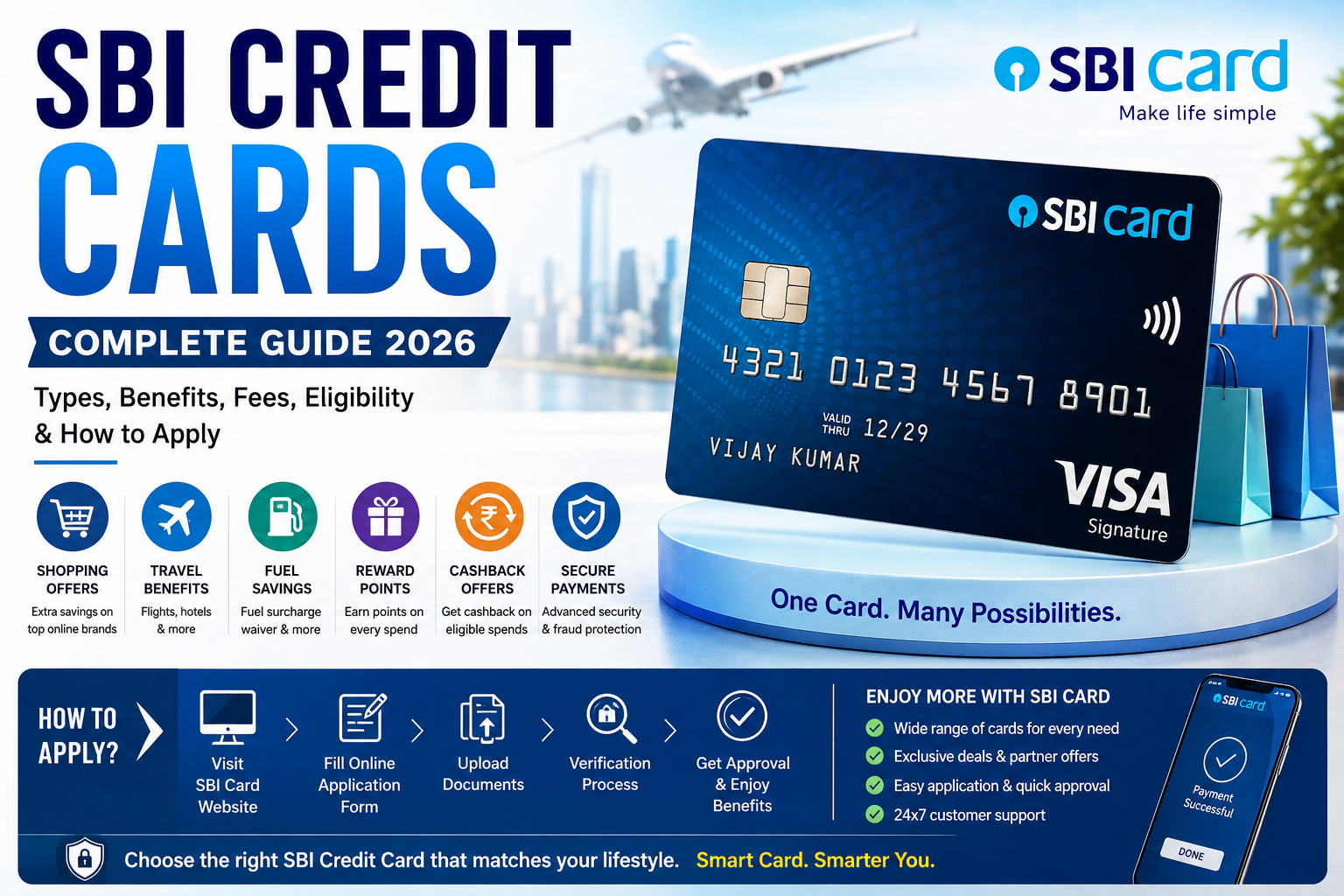
SBI Credit Cards in 2026: Types, Benefits, Fees, Rewards and How to Choose
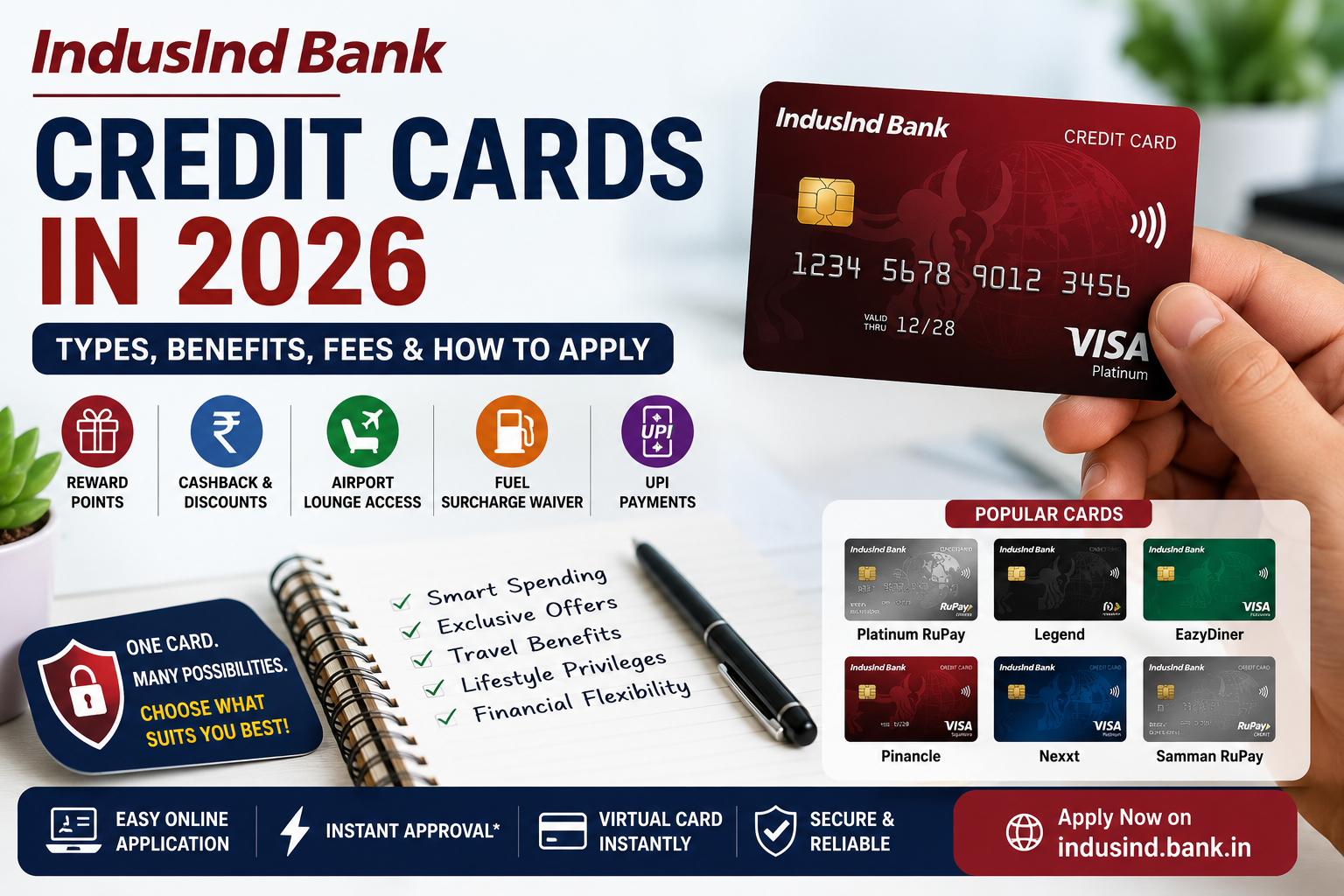
IndusInd Bank Credit Cards in 2026: Types, Benefits, Fees, Eligibility & How to Apply
HSBC Visa Platinum Credit Card: Benefits, Rewards, Fees & Eligibility in 2026
About The Author
