SBI Credit Cards in 2026: Types, Benefits, Fees, Rewards and How to Choose
SBI Credit Cards in 2026: Types, Benefits, Fees, Rewards and How to Choose
SBI Card offers a wide range of credit cards for different spending needs, including cashback, shopping, rewards, travel, fuel and lifestyle benefits.
However, choosing the right SBI credit card is not simply about finding the card with the highest advertised reward rate. A card can be valuable only when its rewards and benefits match the way you normally spend money.
Before applying, it is important to compare the card’s annual fee, rewards, cashback, eligible spending categories, exclusions, benefits, fee-waiver conditions and eligibility requirements.
In this guide, we explain the major SBI credit card categories, how cashback and reward points work, what fees and exclusions you should check, and how to choose an SBI credit card based on your actual spending pattern in 2026.
Important: Credit-card fees, rewards and eligibility requirements can change. Always check the latest terms on the official SBI Card website before applying.
SBI Credit Card Categories

SBI Card currently groups its credit cards into categories including Premium, Lifestyle, Rewards, Cashback, Travel & Fuel, Shopping and Banking Partnership cards.
The right category depends on your spending habits and the benefits you are most likely to use.
Cashback Credit Cards
Cashback cards can be useful if you prefer a direct monetary benefit instead of collecting traditional reward points.
The CASHBACK SBI Card currently offers:
- 5% cashback on eligible online spending
- 1% cashback on eligible offline spending
- 1% fuel surcharge waiver on qualifying fuel transactions
- Renewal-fee reversal when eligible annual spending reaches ₹2 lakh
The current annual and renewal fee is ₹999 plus applicable taxes. The renewal fee can be reversed when eligible annual spending reaches ₹2 lakh.
2026 Cashback Changes
There is an important change to the CASHBACK SBI Card from April 1, 2026.
The maximum cashback in a statement cycle is:
| Spending type | Cashback rate | Maximum cashback |
|---|---|---|
| Eligible online spending | 5% | ₹2,000 |
| Eligible offline spending | 1% | ₹2,000 |
| Total | — | ₹4,000 |
SBI Card’s current FAQ confirms that online cashback is capped at ₹2,000 per statement cycle, offline cashback at ₹2,000, and aggregate cashback cannot exceed ₹4,000 in a statement cycle.
SBI Card has also announced revisions to the CASHBACK SBI Card benefits effective April 1, 2026.
The current card information also lists exclusions including utilities, insurance, fuel, rent, wallets, education, jewellery and railways, among others.
This is why older articles about credit cards should not be followed blindly. Always check the latest terms before calculating your expected cashback.
Shopping Credit Cards
Shopping-focused cards can be useful when you regularly spend on particular shopping platforms or partner merchants.
SBI Card offers cards with benefits linked to specific shopping and partner categories. For example, the Flipkart SBI Card currently advertises benefits on Flipkart, Myntra, Cleartrip and other eligible spending.
Before choosing a shopping card, consider:
- Whether you regularly use the partner platform
- The actual cashback or reward rate
- Annual and renewal fees
- Spending limits
- Reward exclusions
- Redemption options
A card that provides excellent value to one shopper may provide very little value to someone with a different spending pattern.
Travel and Fuel Credit Cards
SBI Card also offers cards designed around travel and fuel spending. Its current credit-card portfolio includes a dedicated Travel & Fuel category.
Depending on the card, benefits may be related to:
- Flights
- Hotels
- Travel bookings
- Fuel
- Dining
- Other eligible spending
Travel and fuel cards can have very different fee structures and benefits, so compare the individual card rather than assuming every card in this category works the same way.
Reward Credit Cards
Reward cards provide points on eligible transactions rather than giving all benefits as direct cashback.
When comparing a reward card, look beyond the number of points advertised. Check:
- Points earned per ₹100 or ₹150
- Bonus categories
- Redemption options
- Actual value of each point
- Expiry conditions
- Reward exclusions
- Annual fee
- Milestone benefits
A card that gives more points is not necessarily better if those points have limited redemption value.
Lifestyle and Premium Credit Cards
Premium and lifestyle cards are designed for customers looking for additional travel, dining, entertainment and other lifestyle benefits.
These cards can provide greater value for some users, but they may also have higher fees and different eligibility requirements.
The important question is not whether a card looks premium. It is whether the benefits you actually use are worth the cost.
How to Choose the Right SBI Credit Card
The best way to choose a credit card is to start with your actual spending pattern rather than the card’s advertising.
Review your expenses from the previous three to six months and divide them into categories such as:
| Spending category | Example monthly spending |
|---|---|
| Online shopping | ₹8,000 |
| Groceries | ₹6,000 |
| Fuel | ₹4,000 |
| Dining | ₹3,000 |
| Travel | ₹5,000 |
| Other expenses | ₹4,000 |
Now compare your spending with the categories rewarded by different cards.
If you spend heavily online, compare cashback and shopping cards.
If you travel frequently, look at travel-focused cards.
If fuel is a major expense, compare fuel-related benefits.
If you prefer flexible redemption, reward cards may be more appropriate.
Do not choose a card simply because it is popular. Choose one that rewards the spending you already do.
Compare the Annual and Renewal Fee
Never look only at the joining fee.
Before applying, check:
- Joining fee
- Renewal fee
- Fee-waiver conditions
- Add-on card charges
- Cash withdrawal charges
- Foreign transaction charges
- EMI-related charges
- Late-payment charges
SBI Card’s current fee information shows that charges vary considerably across its cards. For example, the CASHBACK SBI Card currently has a ₹999 annual/renewal fee, while other cards have different fee structures.
Do not increase your spending simply to qualify for a fee waiver.
Check Reward Exclusions
Reward exclusions are one of the most important things to check before applying.
A card may advertise a high reward or cashback rate, but that rate may not apply to every transaction.
For the CASHBACK SBI Card, the current official page lists exclusions such as utilities, insurance, fuel, rent, wallets, education, jewellery and railways.
Therefore, calculate your expected rewards using eligible spending, not your total credit-card spending.
SBI Credit Card Eligibility and Documents
Eligibility depends on the specific card and the applicant’s profile.
SBI Card may consider factors such as:
- Age
- Income
- Employment or business profile
- Credit history
- Residential status
- Existing banking relationship
- Documents provided
- Internal credit assessment
Meeting basic eligibility conditions does not guarantee approval.
Depending on the card and applicant, the bank may request identity, address, income or employment-related documents. The exact requirements can vary according to the card and applicant profile.
Before applying, check the requirements listed for the specific SBI credit card you are considering.
How to Apply for an SBI Credit Card
The application process generally involves these steps:
1. Compare the available cards
Check rewards, cashback, fees, benefits, eligibility and exclusions.
2. Select the card that fits your spending
Choose the card based on your normal spending rather than promotional offers alone.
3. Submit your application
Provide the personal, employment and financial information requested by SBI Card.
4. Complete verification
SBI Card may request additional documents or verification before making a decision.
5. Track your application
SBI Card provides online facilities for applying and tracking applications.
Always use the official SBI Card website or an authorised channel when applying.
How SBI Cashback Works
Consider a simple example.
Suppose you spend ₹20,000 on eligible online purchases during a statement cycle.
At the current 5% cashback rate:
₹20,000 × 5% = ₹1,000 cashback
However, this calculation applies only to eligible transactions.
The CASHBACK SBI Card currently has a maximum online cashback of ₹2,000 per statement cycle, a maximum offline cashback of ₹2,000, and an aggregate statement-cycle maximum of ₹4,000.
Your actual cashback therefore depends on:
- Eligible transactions
- Spending category
- Statement-cycle limits
- Current exclusions
- Applicable card terms
SBI Credit Card Fees: What to Compare
Before applying, use this checklist:
| Fee or charge | What to check |
|---|---|
| Joining fee | One-time cost |
| Renewal fee | Annual cost after the first year |
| Fee waiver | Required eligible spending |
| Cash withdrawal | Applicable charges |
| Foreign transactions | Foreign-currency/forex charges |
| EMI | Interest and processing charges |
| Late payment | Applicable charges |
| Add-on card | Additional fee, if applicable |
The exact charges depend on the card. SBI Card’s current terms show that annual and renewal fees vary across its card portfolio.
Cashback or Reward Points: Which Is Better?
There is no universal answer.
Cashback can be easier to understand because the benefit is directly linked to eligible spending. It may suit people who prefer straightforward savings and do not want to manage reward-point redemptions.
Reward points can be useful when you value their redemption options, travel benefits or milestone rewards.
The important factor is the actual value you receive from the points, not simply the number of points earned.
If you prefer simple savings, cashback may be easier.
If you regularly use a particular rewards ecosystem, a reward card may provide better value.
Should You Have More Than One SBI Credit Card?
Having multiple credit cards is not automatically better.
Multiple cards can make sense when each one serves a different purpose. For example, one card could be used for everyday cashback while another is used for travel rewards.
However, multiple cards also mean managing:
- Different statements
- Different payment dates
- Different annual fees
- Different reward systems
- Different exclusions
If managing several cards becomes difficult, one well-chosen card may be more practical.
Credit Cards and Your Credit Score
Responsible credit-card use can contribute to a positive credit history.
Good habits include:
- Paying bills on time
- Keeping spending within your budget
- Avoiding unnecessary borrowing
- Reviewing statements regularly
- Avoiding excessive credit applications
However, simply owning a credit card does not automatically improve your credit score.
Your repayment behaviour and overall credit management matter more.
Use Your Credit Limit Responsibly
Your credit limit should never be treated as additional income.
For example, a ₹2 lakh credit limit does not mean you have ₹2 lakh of extra money.
It represents the amount of credit the issuer has made available to you under the card agreement.
If you cannot comfortably repay your purchases, cashback and reward points may not compensate for the cost of carrying debt.
Whenever possible, pay the full statement amount by the due date instead of relying on the minimum amount due.
Common SBI Credit Card Mistakes
Choosing a card only because of its cashback rate
A high advertised rate does not mean every transaction qualifies.
Ignoring annual fees
Calculate whether the benefits you realistically expect to receive justify the annual cost.
Spending extra to earn rewards
Spending unnecessary money just to earn cashback is not genuine savings.
Ignoring exclusions
Always check which transaction categories are eligible before calculating your expected rewards.
Paying only the minimum amount
A minimum payment can leave part of your balance outstanding and may result in additional interest and charges.
Relying on outdated information
Credit-card fees, rewards and exclusions can change. The 2026 revisions to the CASHBACK SBI Card are a good example of why current information matters.
SBI Credit Cards: Pros and Cons
Pros
- Wide range of card categories
- Cashback options
- Shopping-focused cards
- Travel and fuel cards
- Reward cards
- Lifestyle and premium cards
- Multiple options for different spending patterns
SBI Card currently lists Premium, Lifestyle, Rewards, Cashback, Travel & Fuel, Shopping and Banking Partnership categories.
Cons
- Benefits vary significantly between cards
- Some cards have annual fees
- Reward exclusions can reduce the effective reward rate
- Promotional offers may have specific validity periods
- Premium cards may have higher eligibility requirements
- Carrying a credit-card balance can make rewards less valuable
Frequently Asked Questions
Which SBI credit card is best for cashback?
The CASHBACK SBI Card is specifically designed around cashback and currently offers 5% cashback on eligible online spending and 1% on eligible offline spending, subject to exclusions and statement-cycle limits.
Is the SBI Cashback Card free?
No. The current annual and renewal fee is ₹999 plus applicable taxes. The renewal fee can be reversed when eligible annual spending reaches ₹2 lakh.
Can I apply for an SBI credit card online?
Yes. SBI Card provides online facilities for applying for its credit cards through its official website.
What documents are required for an SBI credit card?
Requirements depend on the card and applicant. Identity, address, income and employment-related documents may be requested.
How can I track my SBI credit-card application?
SBI Card provides an online application tracking facility through its official website.
Can I have multiple SBI credit cards?
It depends on your eligibility and the issuer’s applicable rules. Multiple cards can be useful when each card serves a different purpose, but they also require careful management.
Does the SBI Cashback Card have a cashback limit?
Yes. The current maximum is ₹2,000 for eligible online spending and ₹2,000 for eligible offline spending per statement cycle, with an overall maximum of ₹4,000.
Final Verdict
There is no single best SBI credit card for everyone.
The right card depends on:
Your spending → Your preferred rewards → Annual fee → Exclusions → Benefits → Eligibility
If you frequently shop online, compare cashback and shopping cards.
If you travel regularly, compare travel-focused options.
If you prefer flexible reward redemptions, compare reward cards.
And if you want premium lifestyle benefits, make sure the benefits you actually use justify the annual fee.
Before applying:
Compare the card.
Check the fees.
Read the exclusions.
Calculate the real value.
Check the latest terms.
Apply only if the card fits your spending and repayment ability.
Most importantly, use a credit card as a payment and rewards tool—not as a reason to spend more than you can comfortably repay.
A good credit card is one that fits your spending habits and budget, not simply the one with the highest advertised reward rate.
Disclaimer: This article is for educational and informational purposes only and does not constitute financial advice. Credit-card fees, rewards, eligibility requirements, exclusions and offers can change. Always verify the latest information and applicable terms on the official SBI Card website before applying.
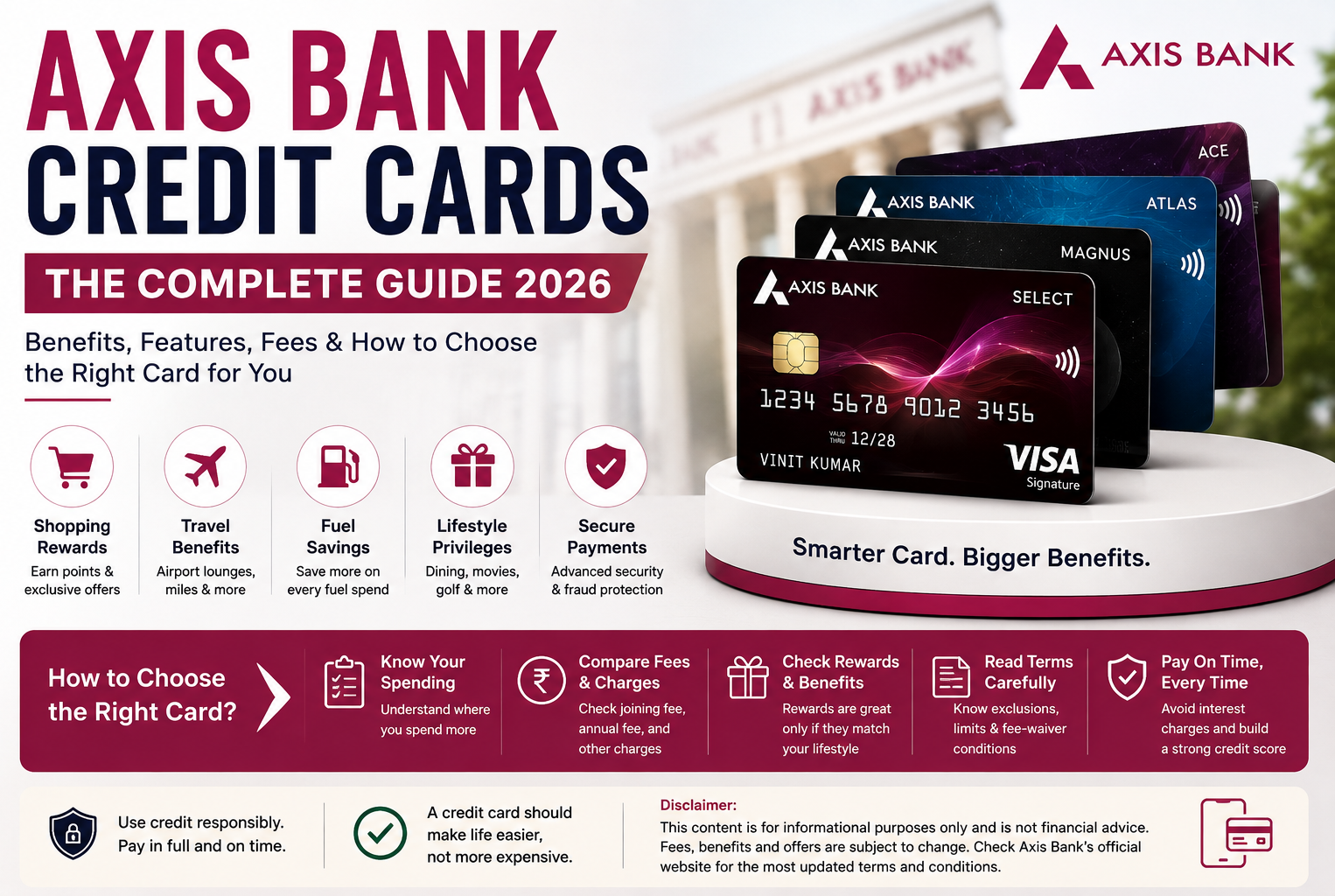
Axis Bank Credit Cards in 2026: Types, Benefits, Fees, Eligibility & How to Choose
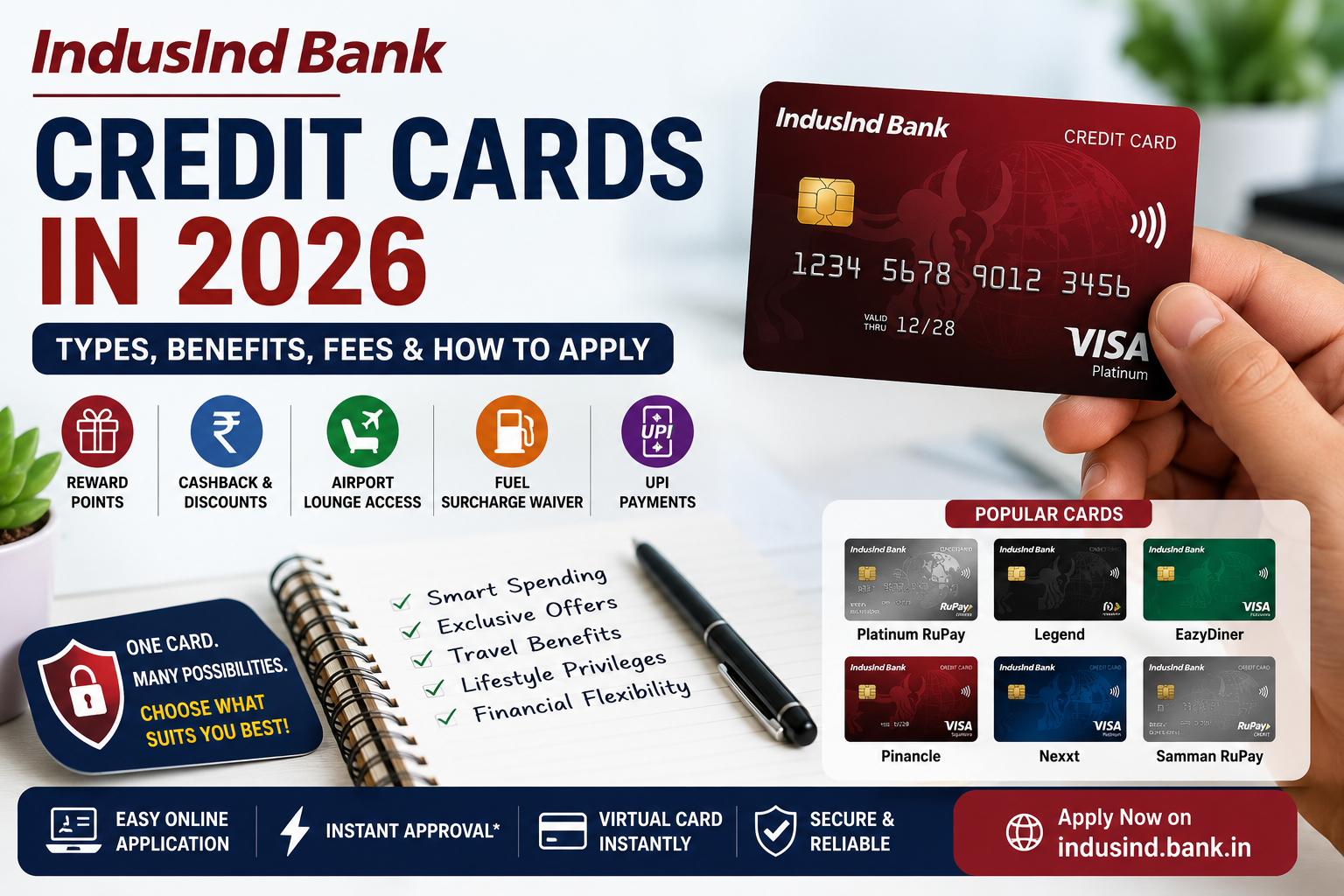
IndusInd Bank Credit Cards in 2026: Types, Benefits, Fees, Eligibility & How to Apply
HSBC Visa Platinum Credit Card: Benefits, Rewards, Fees & Eligibility in 2026
About The Author
